Introduction
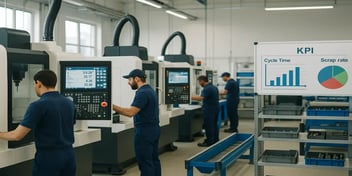
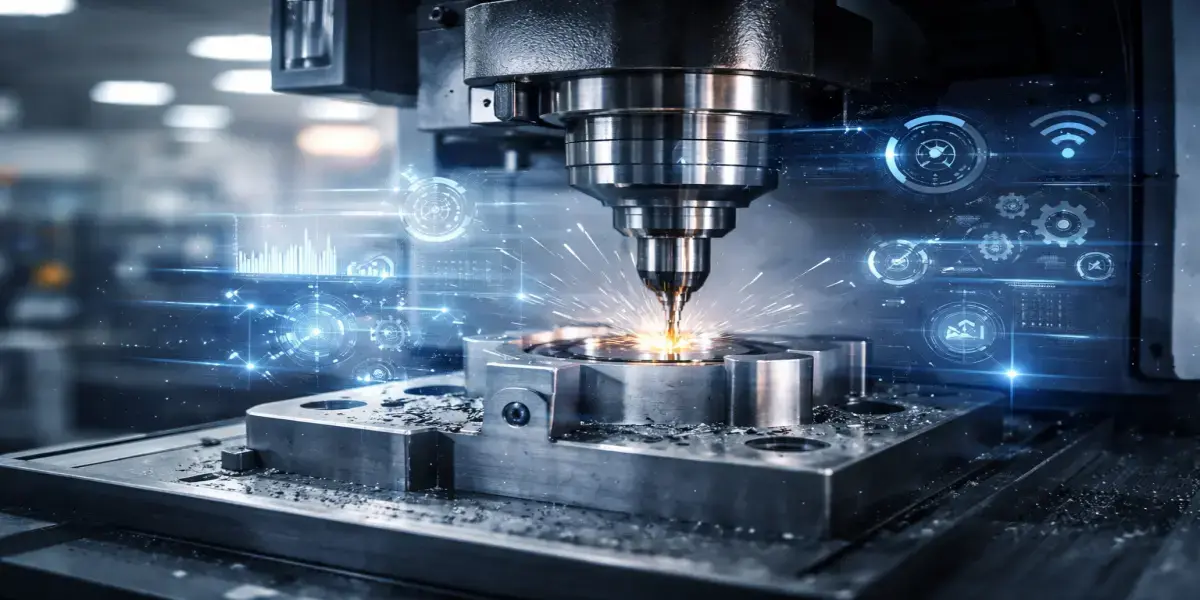
Industry 4.0 is reshaping the manufacturing sector at every level. In machining environments, CNC milling, turning, drilling, multi-axis centers, and high-precision operations, this technological revolution offers an unprecedented opportunity to improve productivity, quality, maintenance, and competitiveness. By integrating connected machines, real-time monitoring systems, AI-driven analytics, robotics, and digital simulation, manufacturers are entering the era of smart machining, where every decision is powered by accurate, real-time data.
This guide explores the key Industry 4.0 technologies transforming machining, their advantages, real-world applications, implementation challenges, and future trends shaping the intelligent machine shop.
1. What Is Industry 4.0 in Machining?
Industry 4.0, the fourth industrial revolution, refers to the integration of advanced digital technologies into traditional manufacturing processes. It relies on four foundational pillars:
- Connectivity (IoT / Industrial IoT)
- Advanced analytics and Artificial Intelligence (AI)
- Intelligent automation (robotics, cobots, autonomous systems)
- Digital modeling (simulation, digital twin)
Applied to machining, these technologies enable manufacturers to:
- connect CNC machines and collect real-time production data;
- monitor performance, OEE, and downtime continuously;
- analyze cutting conditions and detect anomalies;
- optimize machining parameters automatically;
- prevent equipment failures using predictive maintenance;
- enhance production planning and scheduling;
- significantly improve Overall Equipment Effectiveness (OEE).
In other words: Industry 4.0 transforms the machine shop into a connected, intelligent, self-optimizing environment.
2. Industrial IoT (IIoT): The Backbone of Smart Machining
The Industrial Internet of Things (IIoT) connects every element of the shop floor, CNC machines, tools, sensors, operators, and production software, into a unified data ecosystem.
Connected CNC machines capture and send key performance data such as:
- machine states: running, idle, setup, alarm, off;
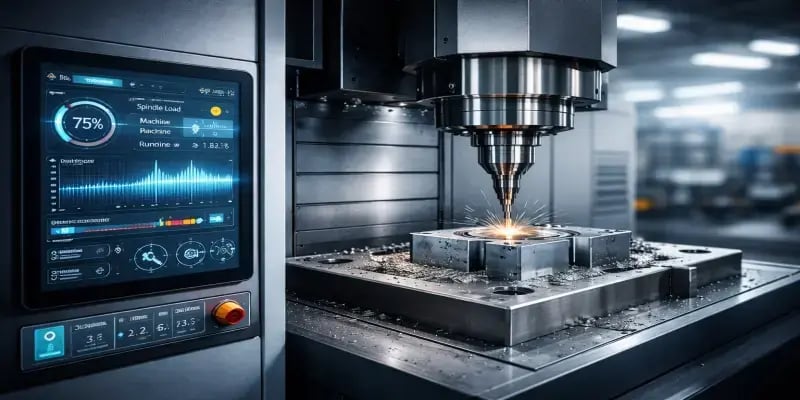
- cutting data: spindle load, feed rate, speed, torque, vibration;
- real vs. theoretical cycle times;
- causes of stoppages and micro-stoppages;
- machine utilization rates;
- process deviations and abnormal patterns.
Benefits of IIoT in machining
- Real-time OEE monitoring
- Instant detection of stoppages and inefficiencies
- Faster troubleshooting and anomaly identification
- Greater visibility across all machining operations
- Strong foundation for predictive maintenance initiatives.
Real-world example
On a 5-axis machining center, a spindle-load sensor detects an abnormal increase in torque. Instead of waiting for tool failure or scrap, the system alerts the operator immediately. The tool is changed proactively, preventing downtime and avoiding expensive damage to the spindle.
3. Artificial Intelligence & Machine Learning for Machining Optimization
AI is one of the most transformative components of CNC Industry 4.0.
Since CNC machines generate thousands of data points every minute, manual interpretation is nearly impossible. AI models analyze these datasets to:
- optimize feed rates, cutting speeds, and tool paths;
- predict tool wear and adjust machining conditions;
- detect vibration anomalies before a defect occurs;
- enhance surface finish quality;
- prevent spindle overload or chatter;
- recommend maintenance actions.
Benefits of AI in machining
- Highly accurate tool-wear prediction
- Reduction of human error in setup and monitoring
- Improved cycle-time consistency
- Dramatic decrease in scrap and rework
- Self-learning machining processes
Real-world example
Machine-learning algorithms detect that a lathe spindle consumes 9% more power while cutting 42CrMo4 steel. This deviation indicates unexpected tool wear. The system automatically adjusts feed rates and alerts the supervisor, preventing failure and ensuring part quality.
4. Advanced Robotics and Cobots in CNC Machining
Automation is a major lever for productivity in machining.
Advanced robotic systems and collaborative robots (cobots) handle repetitive and labor-intensive tasks such as:
- loading and unloading parts;
- swapping tools or fixtures;
- pallet changing;
- cleaning and air-blowing parts;
- automated quality inspection.
Benefits
- 24/7 production capacity (lights-out machining)
- Reduced labor costs and fewer repetitive-strain injuries
- Improved consistency and precision
- Rapid programming and easy integration for cobots
Real-world example
A robotic cell automates part handling for a CNC mill-turn center. The robot loads raw blanks, unloads finished parts, and stacks them neatly. The shop gains several hours of unattended night-shift production.
5. Additive Manufacturing (3D Printing) as a Complement to Machining
Additive manufacturing enhances machining operations by enabling:
- creation of complex geometries not achievable in CNC;
- hybrid workflows (3D-printed near-net shapes finished with CNC);
- faster prototyping cycles;
- significant material-waste reduction.
Benefits
- Highly customizable part production
- Prototype lead times reduced by 2× to 5×
- Lower material and tooling costs
- Ability to manufacture jigs, fixtures, and tooling on demand
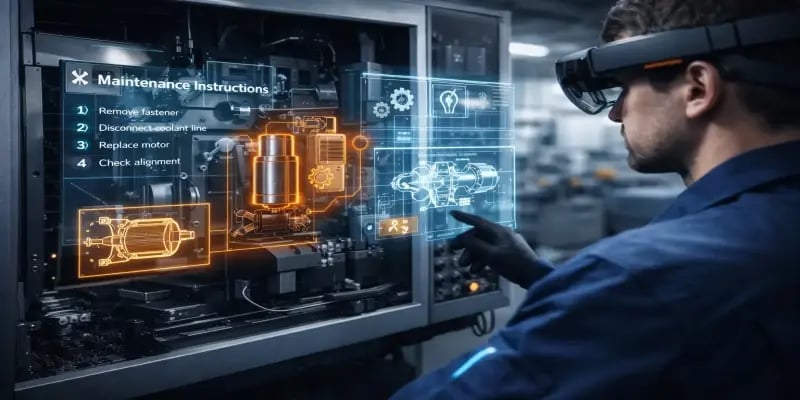
6. Augmented Reality (AR) and Mixed Reality on the Shop Floor
Augmented reality helps technicians and operators perform complex tasks with greater accuracy through real-time visual guidance.
AR provides:
- step-by-step setup instructions;
- tool-change guidance;
- troubleshooting workflows;
- maintenance assistance;
- immersive operator training.
Example
Using AR glasses or a tablet, an operator sees holographic overlays that highlight areas requiring lubrication, alignment, or inspection. This reduces training time and eliminates setup mistakes.
7. Digital Simulation and the Digital Twin
Simulation tools allow shops to validate CNC programs before cutting material.
This includes:
- collision detection;
- verification of tool paths;
- optimization of spindle speeds and feed rates;
- machine-load analysis;
- bottleneck simulation.
The digital twin goes further: it creates a virtual replica of the machine that mirrors real-time conditions and adjusts continuously based on live data.
Benefits
- Fewer programming errors and collisions
- Significant time savings during machine setup
- Optimized tool paths and cycle times
- Better capacity planning.
8. Tangible Benefits of Industry 4.0 for Machine Shops
Machine shops that adopt Industry 4.0 technologies report measurable improvements:
🔸 15–40% increase in productivity
Thanks to automation and optimized machining cycles.
🔸 20–50% reduction in machine downtime
Through predictive maintenance and smart alerts.
🔸 Higher OEE (Overall Equipment Effectiveness)
Real-time monitoring makes inefficiencies visible and actionable.
🔸 Better part quality
Less variation → fewer scrap parts.
🔸 More flexibility
Ideal for high-mix/low-volume machining environments.
9. Challenges in Adopting Industry 4.0
Despite its benefits, Industry 4.0 adoption comes with obstacles:
- Lack of digital skills
Workers and supervisors must learn new tools and workflows.
- Integration with legacy systems
Older CNCs, diverse controllers, and outdated software require gateways or upgrades.
- Upfront investment
Sensors, software, automation equipment.
- Cybersecurity risks
Connected machines must be secured against external threats.
10. Future Trends: Toward the Fully Intelligent Autonomous Machine Shop
Tomorrow’s smart machine shop will be:
- self-adjusting: machines that auto-regulate cutting conditions;
- autonomous: full lights-out production with minimal human intervention;
- AI-optimized: machining parameters automatically tuned;
- robot-enhanced: cobots learning by demonstration;
- digitally unified: seamless ERP–MES–CNC integration;
- predictive : zero unplanned downtime.
The future of machining is connected, adaptive, and fully data-driven.
11. FAQ: Common Questions About Industry 4.0 in Machining
What is Industry 4.0 in machining?
It refers to the integration of IoT, AI, robotics, and digital simulation to build a connected, intelligent machining ecosystem.
What are the main benefits for small and mid-sized shops?
20%+ productivity gains, fewer stoppages, better quality, and improved visibility across operations.
Do shops need to replace all machines?
Not at all. Most start by connecting existing machines using IoT gateways and lightweight monitoring systems.
Where should implementation begin?
- Connect machines
- Monitor OEE
- Automate repetitive workflows
- Add AI and simulation for deeper optimization
Conclusion
Industry 4.0 is revolutionizing machining by making machine shops faster, more precise, more connected, and more autonomous. Through IoT connectivity, AI-driven optimization, advanced robotics, simulation tools, and augmented-reality guidance, manufacturers can:
- increase productivity;
- reduce downtime;
- improve part quality;
- optimize machine utilization;
- anticipate failures;
- adapt quickly to customer demands.
Transitioning to smart machining is no longer optional —
it is a strategic advantage for every manufacturer aiming to compete in today’s global market.
From ERP planning to real-time smart scheduling