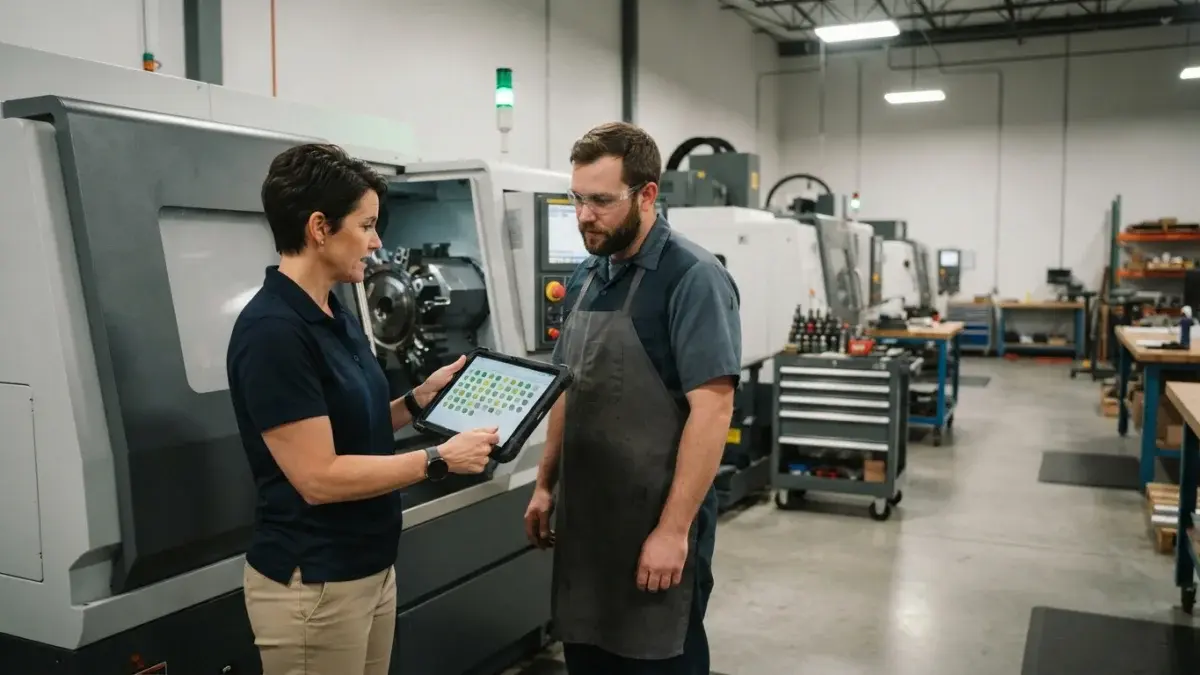
A skills matrix is a grid that maps your operators against your machines and shows, in each cell, how independently each person can run that machine. In a CNC shop, it answers the question every supervisor …
Read article →: Skills Matrix for CNC Shops: Guide and Example
Choosing manufacturing time tracking software for a CNC shop or a factory is about much more than counting hours of attendance. For a production manager, a shop supervisor or a planner, the right tool changes …
Read article →: Manufacturing Time Tracking Software: 7 Types for CNC Shops
In a CNC shop, operators rarely stand in front of one machine waiting for the cycle to end. While the spindle runs, they inspect the previous part, deburr, prepare the next blank, preset a tool or reload a bar …
Read article →: Hidden-Time Operator Tasks: How to Schedule Them in CNC Shops

Rolling out operator workload tracking in a CNC shop is rarely a technical problem. The real risk is human: if operators see it as a stopwatch pointed at them, they work around it, dispute it, or ignore it, …
Read article →: Shop Floor Change Management: Getting Operators on Board

A consistent shift handover can make or break daily throughput on a small CNC line. This guide on shift handover CNC shop practices explains what to capture at the machine, how to standardize the exchange …
Read article →: Shift Handover Best Practices for CNC Machine Shops
Labor efficiency is the single number that tells a manager, in one glance, how well a shop is converting paid hours into productive work. It is not a replacement for the floor-level mechanics of tracking a …
Read article →: Labor Efficiency in CNC Shops: How to Measure and Improve It

Most connected worker pilots start well. A few machines get a tablet or a screen. Operators like it. The data looks good. Then, a few months later, nothing has changed. The shop is still running the same two …
Read article →: Scaling Connected Worker Technology in Your CNC Shop
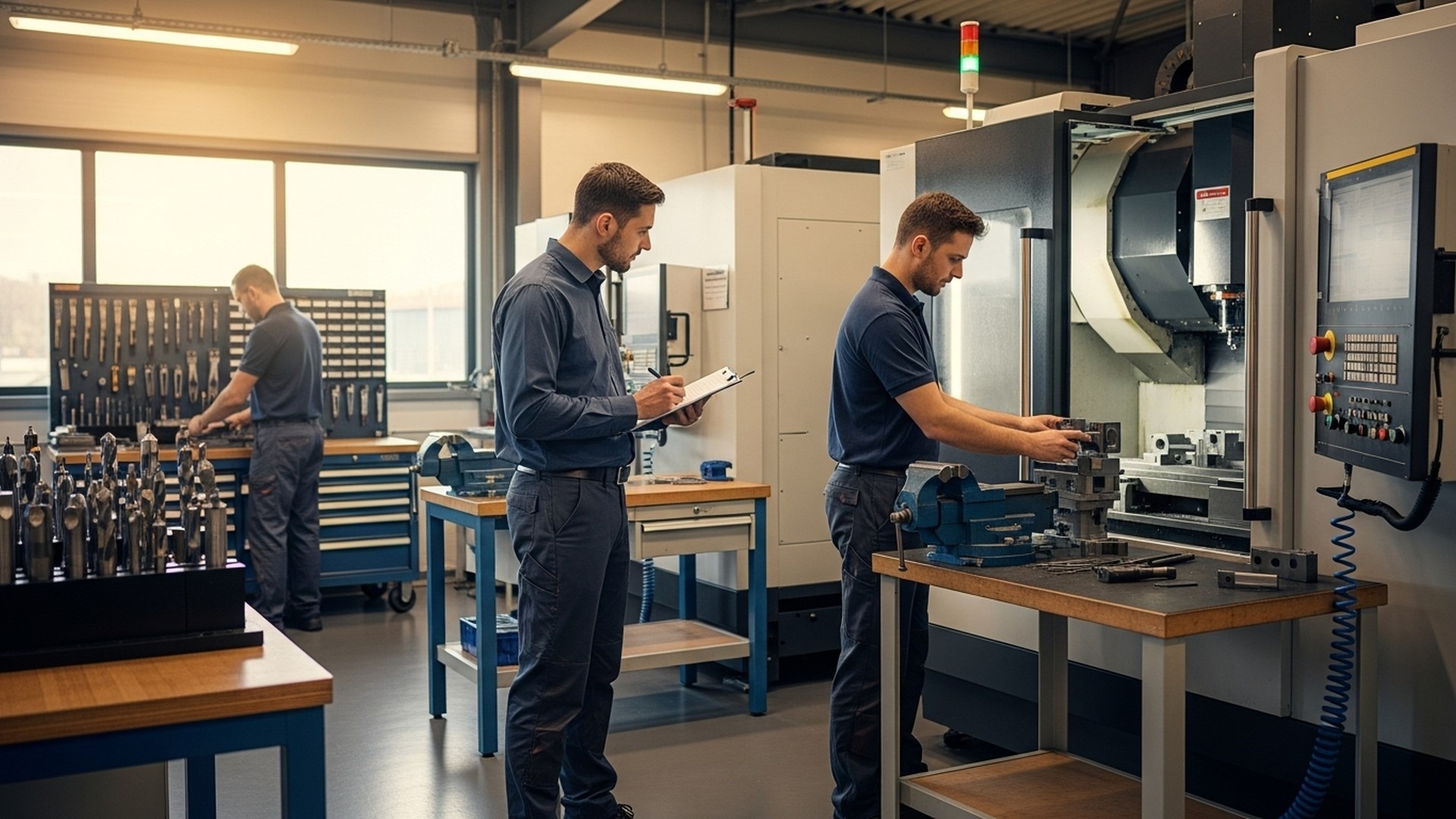
Before running a full operator workload audit, 15 minutes is enough to find out whether your shop actually has a problem, and which kind. This diagnostic scores your shop on five dimensions and routes you …
Read article →: CNC Operator Workload: Diagnose Your Shop in 15 Minutes
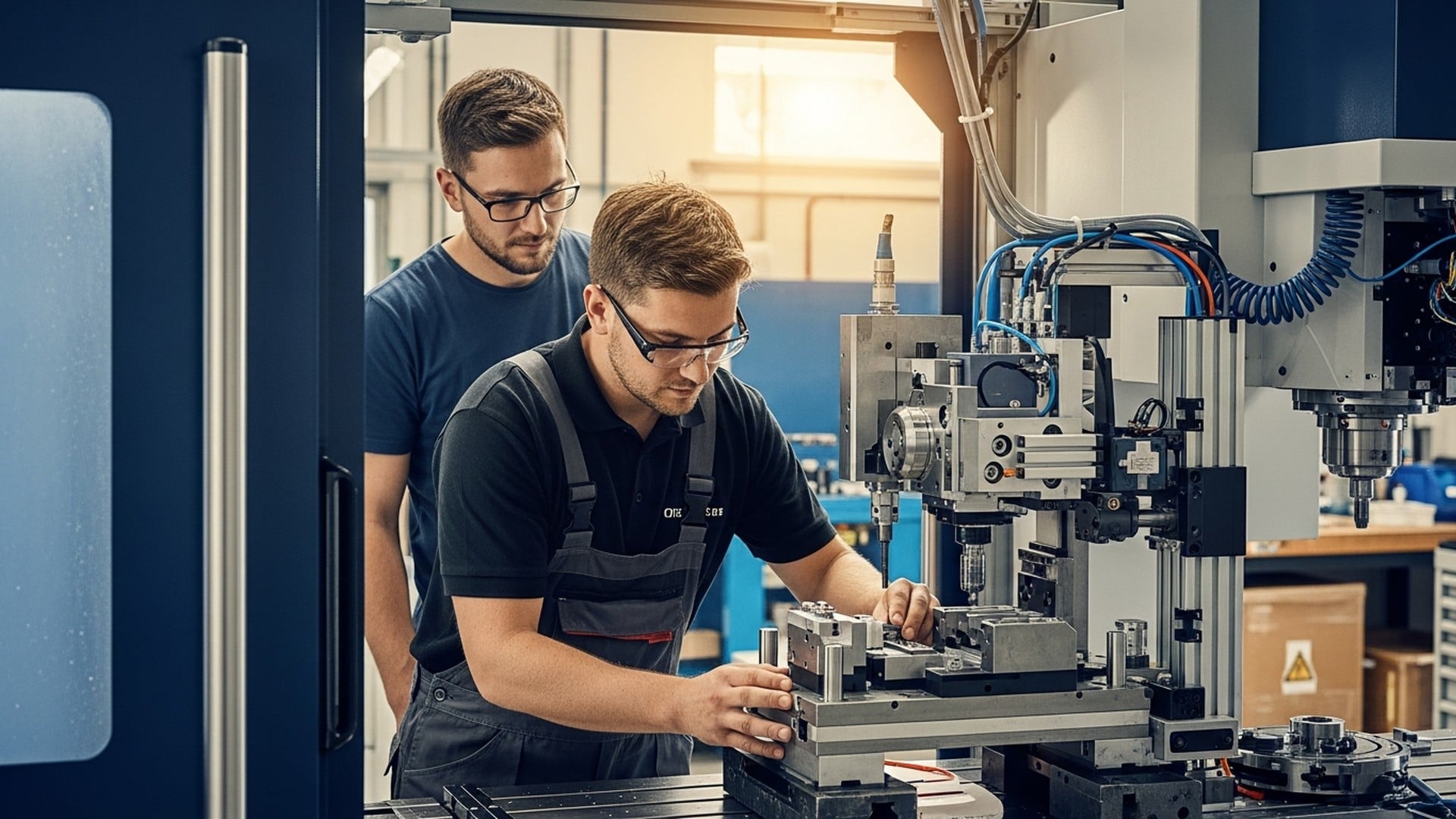
Automating a CNC shop on a budget is often the fastest way to increase throughput without hiring — provided you know where to invest first. This article lays out a structured, tiered-investment approach: …
Read article →: Automate a CNC Shop on a Budget: A Guide to Investment Tiers
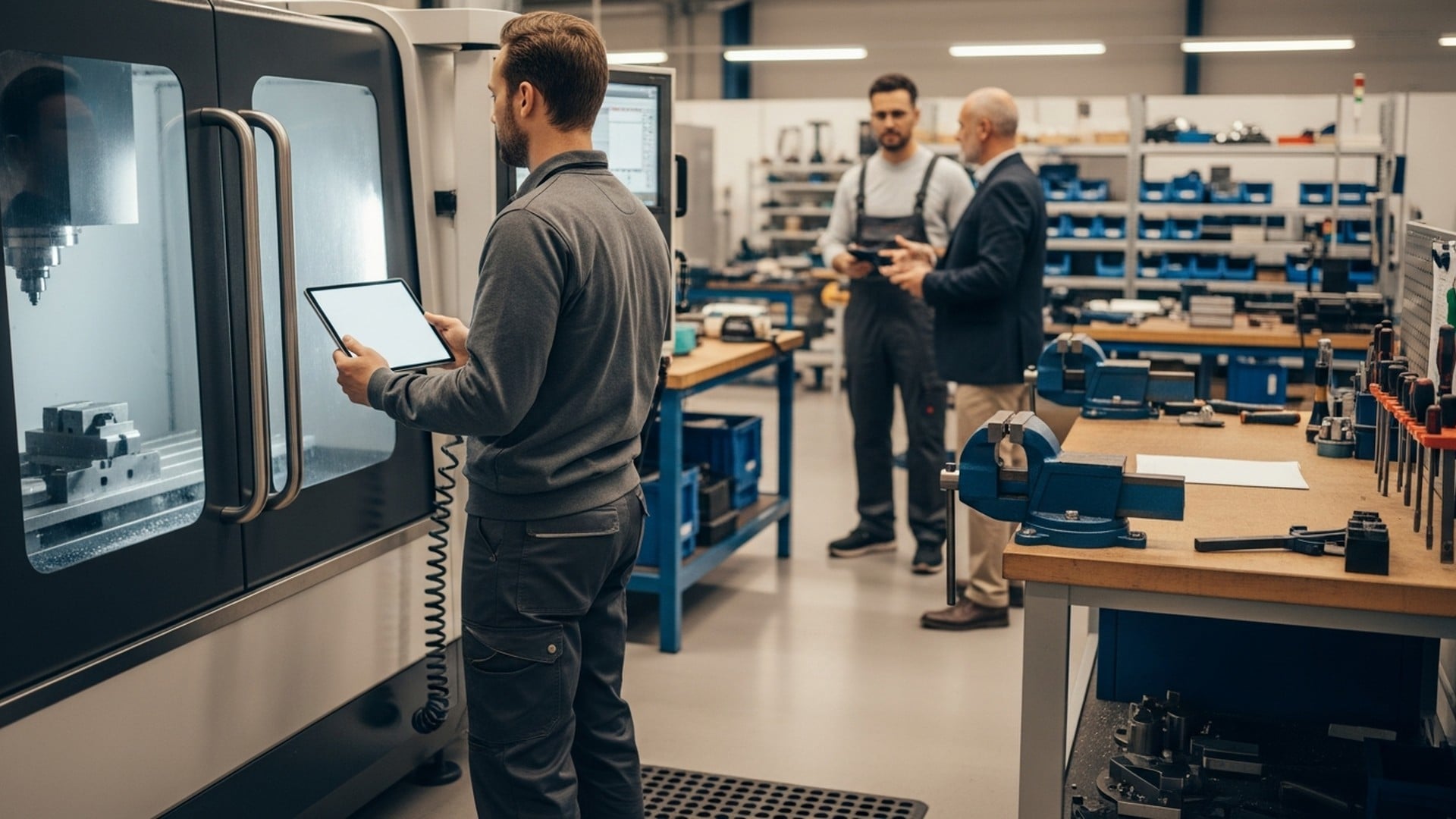
Connecting your operators' data to an ERP or MES without launching a heavy development project delivers quick wins for workforce planning: better visibility into each operator's workload, fairer allocation …
Read article →: Connect Operator Data to an ERP/MES Without a Heavy Project

Measuring operator workload on the shop floor is the first step to increasing throughput without hiring and reducing non-productive time in CNC shops. This tutorial explains how to collect the right data, …
Read article →: Measuring Operator Workload in CNC Shops: 5 Indicators and Formulas
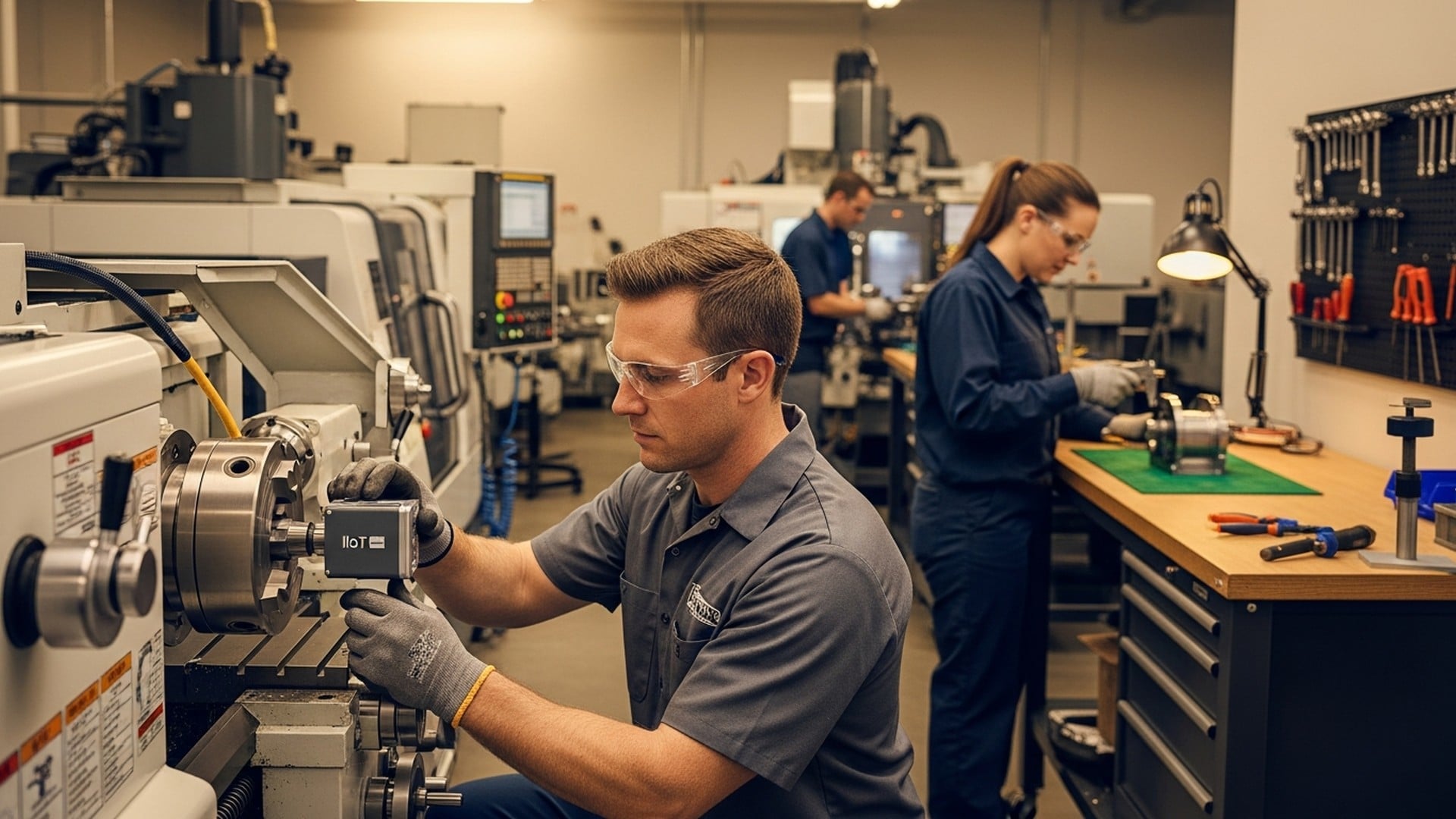
Small contract shops with mixed CNC fleets often rely on paper logs and operator memory to record who did what and when. Automating operator workload tracking CNC processes with industrial IoT (IIoT) captures …
Read article →: 7-Step Checklist to Automate Operator Workload Tracking on CNC Machines Using IIoT
